
Using AI tools is becoming a habit for more and more people, including in healthcare. The main problem here is the use of private user accounts that are not provided by the employer. Yet according to an article in Handelsblatt, this appears to be happening more and more often. It is particularly critical when sensitive patient data is uploaded in the process (into AI chatbots, for example), because this increases the risk of data ending up in insecure places.
Yet AI actually offers many prospects for better and faster patient care, as the latest Future Health Index 2025 by Philips suggests: almost 2,000 healthcare professionals from 16 countries and more than 16,000 patients were surveyed. Staff see the potential of AI in automating routine tasks and treating more patients, for example.
A blanket ban on AI tools is therefore unlikely to be effective in most cases. Instead, organisations should consider how they can enable regulated and controlled use of such technologies by their staff.
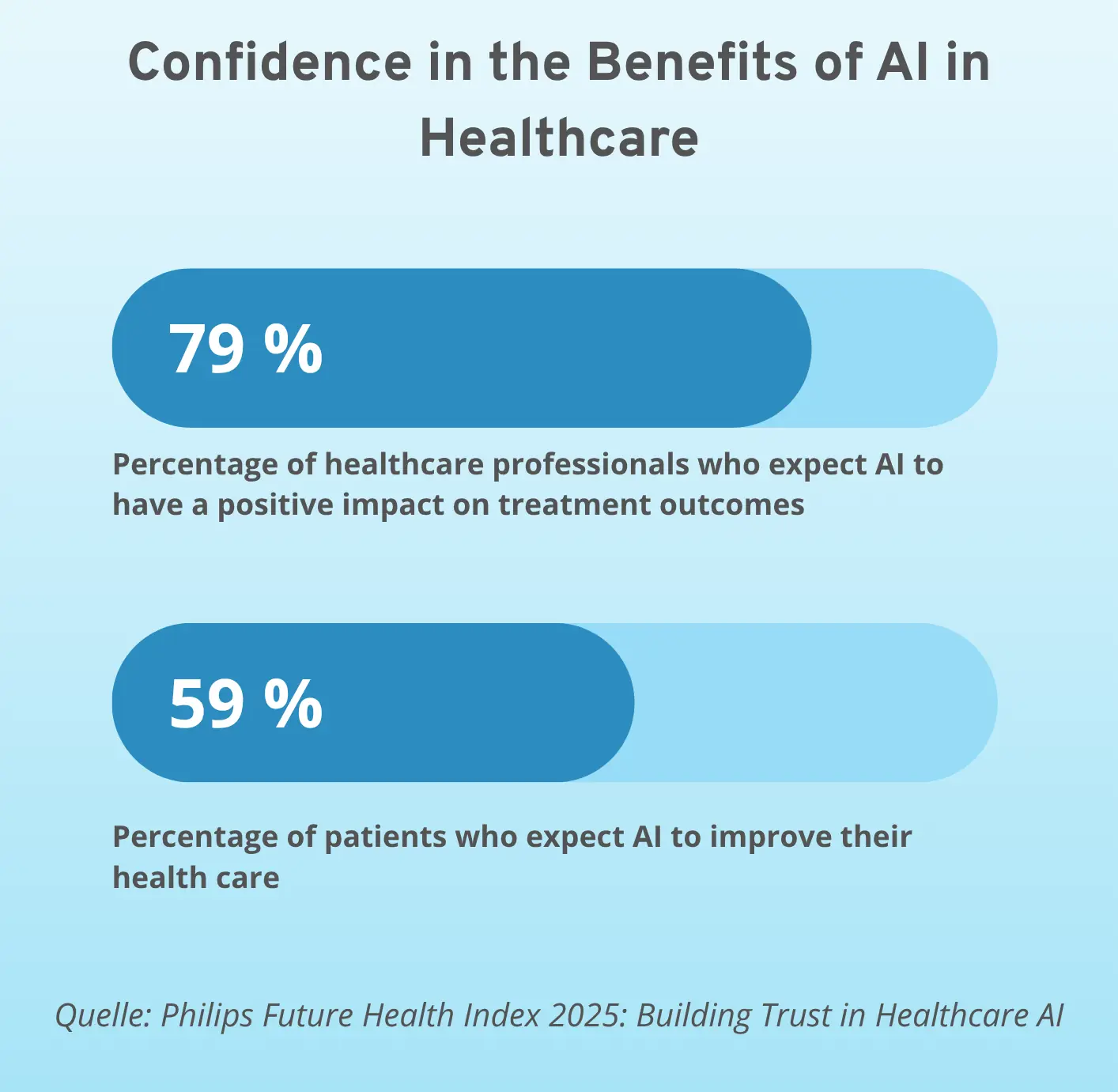
The study also identifies a trust gap, however: while 79% of medical staff are optimistic that AI improves treatment outcomes for those being treated, that is true of only 59% of patients.