
Digital Biomarkers in Clinical Trials: We Integrate Wearables, Sensors and Medical Devices
We develop study apps and data platforms that integrate wearables, sensors and connected medical devices and bring their data into your study completely and traceably. Aligned with the requirements of the US Food and Drug Administration (FDA) and the European Medicines Agency (EMA) for study data. Certified to ISO 13485 and ISO 27001.






















What are digital biomarkers?

A digital biomarker is a measurement of a person’s body or behaviour that is provided by a smartphone, a wearable or a medical sensor and whose clinical meaning has been established. It is not captured at a single point during a site visit but continuously in patients’ daily lives, through active tests such as a walking test or passively in the background, for example as step count or heart rate.
Turning this into reliable study data requires software that connects the devices, checks the data and transfers it traceably into the study. This is the software we develop.
What we develop for your digital biomarker
We deliver the complete software between device and study database, or individual components of it, complementing your team and your partners.
 Medical device
 Smartwatch
 Wristband
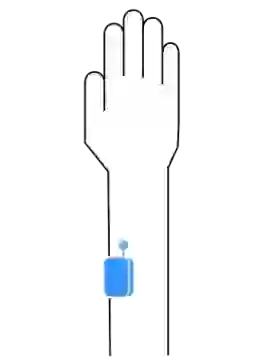 Sensors

Device and sensor integration
Integration of medical sensors, connected medical devices and consumer wearables via Bluetooth, through device manufacturers’ APIs and cloud services, or through platforms such as Apple HealthKit and Health Connect, with stable synchronisation.

Study apps and active tests
Apps for iOS and Android that run active tests such as walking tests, tapping tests or cognitive tasks in a standardised way, including for studies in which patients take part fully or partly from home. Plus electronic questionnaires (electronic patient-reported outcomes, ePRO).

Signal processing and algorithms
From raw signal to digital measure: filters, feature extraction and machine learning models, on the device or in the cloud. Fully versioned so that every value remains reproducible.

Data platforms and monitoring
Backend and dashboards that show study teams early on who is skipping tests and where measurements are missing. With audit trail, role-based access control and transfer to your EDC (electronic data capture) system or your study database, aligned with the FDA regulation on electronic records (21 CFR Part 11) and the EMA guideline on computerised systems.

Verification and validation
We check whether the software has been built correctly (verification) and whether it fulfils its purpose in actual use (validation). In line with IEC 62304 within our ISO 13485 certified quality management system, with risk management according to ISO 14971. This includes usability engineering according to IEC 62366. The clinical validation of the biomarker itself is not part of our service.

Regulatory classification
Is your combination of app and sensor a medical device? We clarify the intended purpose and risk classification under the MDR and FDA regulations and, if required, take on the role of legal manufacturer under the MDR.
How your digital biomarker makes it into the study
This is how we work with your study team, from the first conversation to operation during the study. The documentation according to IEC 62304 and ISO 14971 is created continuously throughout development rather than retrospectively at the end.
1. Define the measurement concept
Which measure, which device, which patients? We assess with you what is technically feasible and clarify whether the software is a medical device and which rules apply in your study countries.
2. Select and connect devices
We connect the wearable, the sensor or the medical device and test the connection early with real devices, so that data gaps come to light before the study starts, not during it.
3. Build the app and algorithm
We develop the app for study participants and implement the algorithm that calculates the measure from raw data. We turn existing research code into maintainable, documented software.

4. Verify and validate
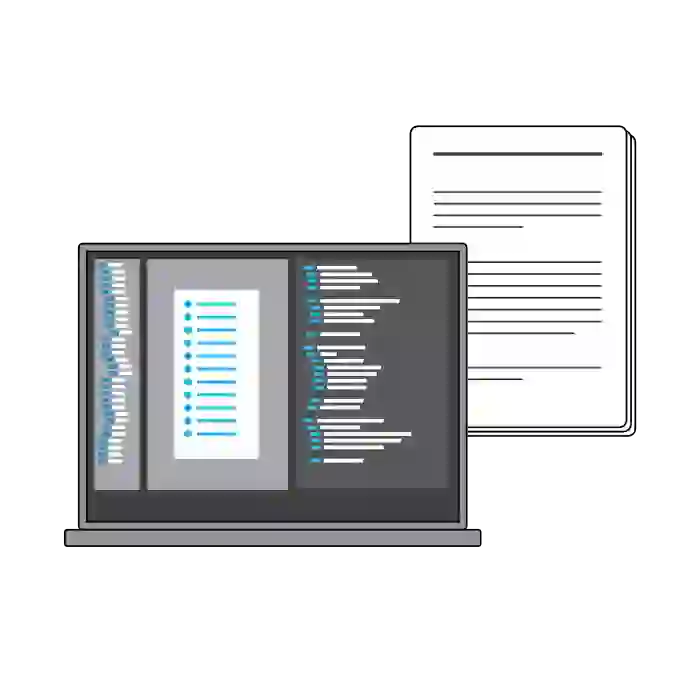
We test the entire data chain from the device to the export and check whether the software does what it is intended to do in everyday study conditions.
5. Start the study
The data platform and dashboards go live. From day one, your study team can see whether data arrives completely and receives the data directly in its EDC system or in the agreed format for your study database.
6. Technical maintenance and operation
During the study, we take on maintenance and operation of the software on request: we monitor data completeness, fix errors and roll out updates in a controlled and documented way.
How your digital biomarker makes it into the study
This is how we work with your study team, from the first conversation to operation during the study. The documentation according to IEC 62304 and ISO 14971 is created continuously throughout development rather than retrospectively at the end.
1. Define the measurement concept
Which measure, which device, which patients? We assess with you what is technically feasible and clarify whether the software is a medical device and which rules apply in your study countries.
2. Select and connect devices
We connect the wearable, the sensor or the medical device and test the connection early with real devices, so that data gaps come to light before the study starts, not during it.
3. Build the app and algorithm
We develop the app for study participants and implement the algorithm that calculates the measure from raw data. We turn existing research code into maintainable, documented software.
4. Verify and validate
We test the entire data chain from the device to the export and check whether the software does what it is intended to do in everyday study conditions.
5. Start the study
The data platform and dashboards go live. From day one, your study team can see whether data arrives completely and receives the data directly in its EDC system or in the agreed format for your study database.
6. Technical maintenance and operation
During the study, we take on maintenance and operation of the software on request: we monitor data completeness, fix errors and roll out updates in a controlled and documented way.
Reference projects

CardioCare
Digital biomarkers via FDA-cleared wearables
The app supports patients with cardiovascular disease and integrates several wearable sensors. We developed the software further and brought it to market as a medical device in five languages.
Wearable integration · Medical device
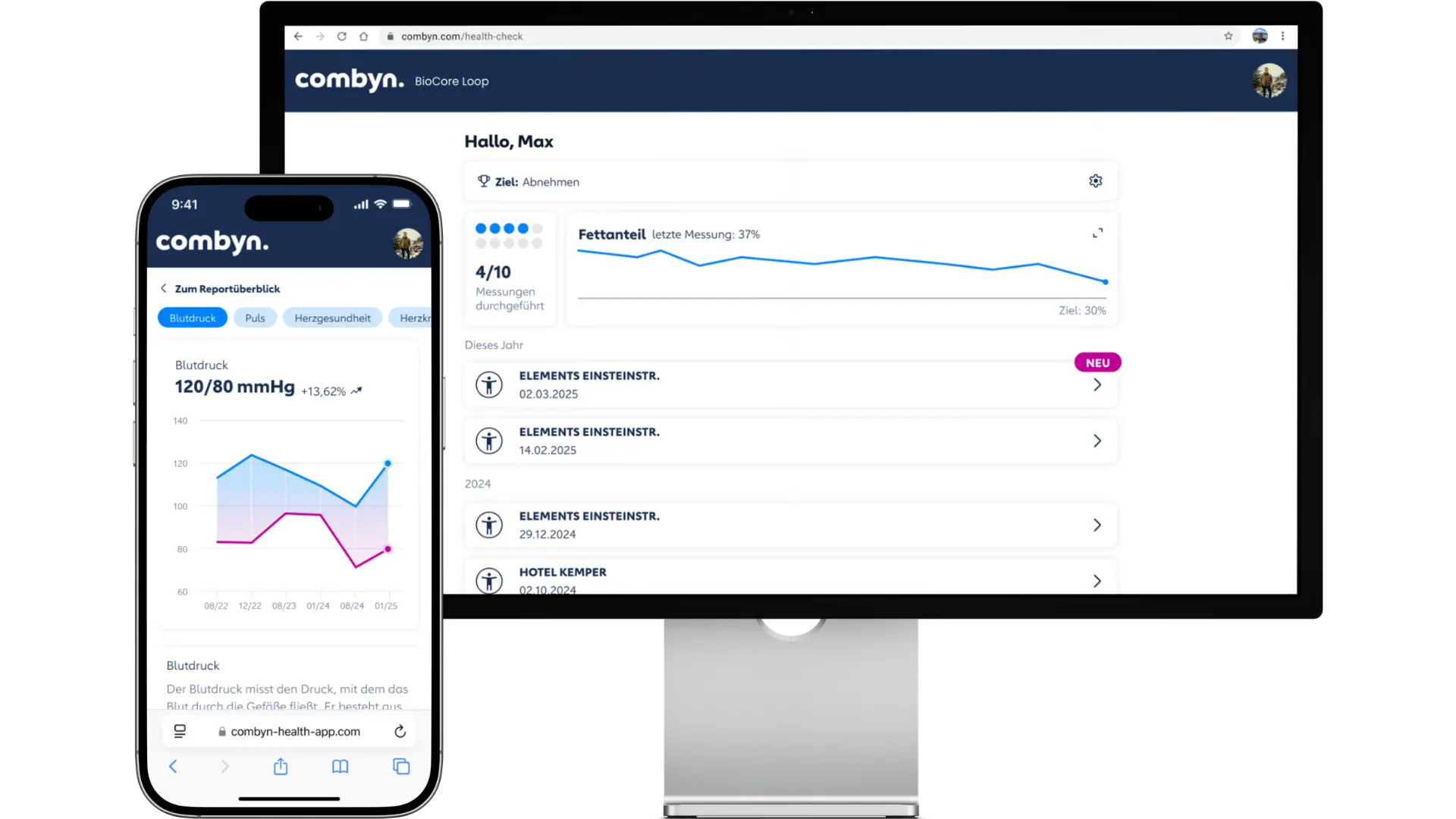
Combyn
Signal processing from ECG and bioimpedance
For an autonomous health terminal, we developed embedded software, backend and web platform: from signal processing directly on the device to the health report. Developed in line with IEC 62304 (safety class B). CE marking as a class IIa medical device under the MDR is in progress.
Signal processing · Embedded · IEC 62304

Swiss Cannabis Research
Platform for the largest cannabis pilot study in Switzerland
Onboarding, questionnaires, randomisation and regular health surveys for several thousand study participants, developed in close collaboration with the participating universities. The study has been running since May 2024 and is planned for five years.
Study platform · ePRO · Data protection

“The product can be connected to several FDA-cleared wearable sensors, which enables the capture of digital biomarkers as part of clinical studies. We are extremely satisfied with the result and look forward to a continued successful collaboration.”
Dr. Roman Schenk
Managing Director and Board Member, Recardio Inc. (CardioCare)
Validating digital biomarkers: what reliable measurements require
A validated or regulator-qualified digital biomarker retains its clinical meaning as long as you use it in the same context of use: same population, same role as an endpoint, same measurement protocol. You still need to show that the device, app and algorithm in your study measure as reliably as in the validation. This is how we contribute:


Adopt the validated system unchanged
We integrate sensor, firmware and algorithm in the validated version and keep the data chain traceable up to the study dataset.

Support deviations with comparison data
If the device, software version or algorithm differs from the original, we set up the technical basis for the comparison against the reference method and support the analysis. For updates during the study, we cross-check the measurements before and after the change.

Complete data and documentation
The study dashboard flags connection drops, drained batteries and skipped tests early. We document verification and validation of the software, aligned with the expectations of the FDA and EMA, even if the software is not a medical device.
Clinical validation remains the sponsor’s responsibility. If you are developing a new digital biomarker, we deliver the software you need to carry it out.
Sources: FDA guidance (PDF), sections IV.A, IV.C, IV.D and IV.H · EMA, Questions and answers 2020, question 12 · EMA Qualification Opinion Duchenne 2023 · Goldsack et al., npj Digital Medicine 2020
Digital biomarkers and regulation: FDA, EMA and MDR
Anyone collecting digital biomarkers in studies must show that the technology and data are reliable. Which rules apply depends on where the study is conducted and whether the software is a medical device.

FDA (USA)
The FDA groups smartwatches, sensors, study apps and similar technology under the term digital health technologies (DHT). Its DHT guidance of December 2023 expects the following in clinical investigations:
- Verification and validation, even if the DHT is not a medical device
- Usability evaluation with the trial population
- Participants’ own smartphones (bring your own device) only with sponsor-provided devices as an alternative
EMA (EU)
For software in clinical trials of medicinal products, the following apply in particular:
- EMA guideline on computerised systems (2023), also covering wearables, participants’ own devices and electronic questionnaires
- International Council for Harmonisation (ICH) guideline on good clinical practice, ICH E6(R3): in effect since July 2025, explicitly mentions wearables and sensors
- Qualification of new digital endpoints by the EMA, e.g. Stride Velocity 95th Centile (SV95C) in Duchenne
MDR (EU)
Software is a medical device if the manufacturer assigns it a medical intended purpose, e.g. diagnosis or monitoring for the individual patient. Software that only stores or transmits data is usually not a medical device (Medical Device Coordination Group guidance MDCG 2019-11).
If your study app measures an endpoint, it may therefore be a medical device itself under the Medical Device Regulation (MDR). This determines which documents ethics committees and authorities require.
Examples: what digital biomarkers measure today
What can such software already measure today? Five examples from research and regulatory decisions since 2023 show what is possible.

Atrial fibrillation with the Apple Watch
The smartwatch measures how much time per week a patient spends in atrial fibrillation.
May 2024: The FDA qualified the feature as a measurement tool for medical device studies (Medical Device Development Tool). It is the first digital health technology in this programme.
Source: FDA Roundup, May 2024

Early Parkinson’s with smartwatch and app
Apple Watch and iPhone app capture gait, arm swing and tremor, in tests at the clinic and passively at home.
June 2024: The WATCH-PD study with 82 patients showed that the smartwatch detects the increase in rest tremor at home over the course of one year.

Time in range for diabetes
A continuous glucose monitoring sensor shows how much time patients spend in the target range.
Since January 2024: The EMA guideline for diabetes trials explicitly encourages the use of such sensors and lists time in range as a possible endpoint.
Source: EMA diabetes guideline, Rev. 2

Walking in Duchenne muscular dystrophy
Body-worn motion sensors measure how fast children walk in daily life. The measure is called Stride Velocity 95th Centile (SV95C).
July 2023: The EMA qualified SV95C as a primary endpoint, as an alternative to the 6-minute walk test. In 2026, Dyne is starting a phase 3 study with SV95C as a secondary endpoint.
Sources: EMA Qualification Opinion 2023 · FORZETTO study

Cough frequency in chronic cough
An audio recorder captures coughing over 24 hours. This shows how often a patient coughs per hour.
September 2023: The EU approved the medicine Lyfnua (gefapixant). Efficacy was measured as cough frequency.

Your digital biomarker
Do you have an idea for a measure, an algorithm from research or a sensor that needs to go into a study? We show you which software is required and how to set it up so that it is ready for regulatory review.
What sets us apart

ISO 13485 certified
Our quality management system is certified to ISO 13485. This ensures compliant development of software as a medical device and takes into account the requirements of the MDR and the FDA (21 CFR) for quality management systems.

ISO 27001 certified
QuickBird Medical is certified to ISO 27001 for information security. We are experts in cybersecurity and data protection for health data.

Legal Manufacturer
If required, we take on the role of legal manufacturer for your medical device software. We thus bear the legal responsibility for compliance with all regulatory requirements of the MDR. This lets you focus on your core competencies.
Frequently asked questions about digital biomarkers
How does the EMA define a digital biomarker?
The European Medicines Agency describes it as follows:
“A digital biomarker is an objective, quantifiable measure of physiology and/or behaviour used as an indicator of biological, pathological process or response to an exposure or an intervention that is derived from a digital measure. The clinical meaning is established by a reliable relationship to an existing, validated endpoint.”
A measurement from a wearable is therefore not yet a biomarker. It only becomes one once it has been shown to be reliably related to a recognised clinical measure.
Source: EMA, Questions and answers: Qualification of digital technology-based methodologies (2020)
What is the difference between a digital biomarker and a digital endpoint?
A digital biomarker is a measure, e.g. an irregular pulse from smartwatch data. A digital measurement becomes a digital endpoint when a clinical study uses exactly this measure to determine whether a therapy works. Every digital endpoint is therefore based on a digital measurement, but not every digital biomarker serves as an endpoint.
Does a wearable in a clinical trial have to be an approved medical device?
USA: Not necessarily. According to the FDA’s DHT guidance, devices used in a clinical investigation are exempt from most requirements that apply to medical devices, including premarket clearance or approval, as long as the investigation complies with 21 CFR Part 812. The FDA still expects verification and validation, regardless of medical device status.
EU: There is no comparable exemption for devices that serve only as measurement tools in clinical trials of medicinal products. Software and wearables that measure endpoints in such trials are often medical devices themselves. If such a device is not CE-marked or is used outside its intended purpose, the MDR does not specify which documents are needed for the trial. National authorities have so far taken different approaches, as EFPIA, the European pharmaceutical industry federation, describes in a position paper. We therefore clarify the classification with you for each study country at the outset.
Smartphone or wearable: which is better for a digital biomarker?
It depends on the measure. Smartphones are well suited for active tests such as tapping, speech or walking tests and most patients already own one. Wearables measure passively and continuously, for example pulse, activity or sleep. Many studies combine both. With patients’ own devices (bring your own device), the variety of models is an additional challenge for data quality.
Can existing wearables or algorithms be integrated?
Yes. Often a sensor, an algorithm from research or a study platform already exists. We integrate these building blocks, turn research code into maintainable and documented software and close the gaps that remain for regulated use.
How is data protection ensured for continuously collected health data?
Digital biomarkers generate exceptionally large volumes of highly sensitive data. We rely on data minimisation, pseudonymisation, encryption in transit and at rest, and hosting in the EU, in line with the General Data Protection Regulation (GDPR). We are certified to ISO 27001. Information security is therefore an integral part of our processes.
Planning a study with digital biomarkers?
Our team supports you with the technical planning and implementation of your digital biomarker, from the measurement concept to operation in the study. You benefit from our experience with regulated software under the MDR and FDA regulations. Get in touch and arrange a no-obligation initial consultation.